










Blog

CMM Inspection Services: The Essential Guide to Quality Control and Metrology in Modern Industry

Introduction

In today's fast-paced and technologically advanced world, manufacturing industries are under constant pressure to produce high-quality products with tight tolerances, while reducing costs and improving efficiency. The role of quality control and metrology in achieving these goals cannot be overstated. Enter CMM Inspection Services, an invaluable resource for modern industries. This essential guide will provide an overview of CMM inspection services, how they are utilized in various sectors, and the key benefits they bring to the table.

What are CMM Inspection Services?

Coordinate Measuring Machines (CMMs) are precision instruments that measure the geometric characteristics of an object. CMM inspection services involve using these machines to evaluate a part's dimensions and compare them to the original design specifications, ensuring that products meet strict quality control standards. With an impressive range of applications, CMM inspection services are employed in industries such as automotive, aerospace, medical, and electronics manufacturing, among others.

Key Components of CMM Inspection Services

  1. Hardware: At the heart of any CMM inspection service is the coordinate measuring machine itself. These machines vary in size and design, from small tabletop models to large gantry-style machines. The selection of the appropriate CMM depends on factors such as part size, measurement accuracy requirements, and the environment in which it will be used.
  2. Probes: CMMs use various types of probes to collect measurement data from the part being inspected. Some common probe types include touch-trigger probes, scanning probes, and non-contact probes, each with its own unique advantages and applications.
  3. Software: CMM inspection services rely on sophisticated software to process the data collected by the probes, analyze the results, and generate detailed reports. This software can also interface with computer-aided design (CAD) programs, enabling a seamless comparison between the inspected part and the original design.
  4. Expertise: CMM inspection services require skilled technicians and engineers with a deep understanding of metrology principles and CMM operation. These professionals are responsible for the calibration, maintenance, and troubleshooting of the equipment, as well as the interpretation of the inspection results.

Benefits of CMM Inspection Services

  1. Improved Accuracy: CMM inspection services offer a high level of accuracy and repeatability, ensuring that products adhere to strict quality standards. By identifying deviations from design specifications early in the manufacturing process, costly rework and scrap can be reduced.
  2. Enhanced Efficiency: By automating the inspection process, CMM inspection services significantly reduce the time required for quality control. This increased efficiency translates to shorter production cycles and faster time-to-market for products.
  3. Comprehensive Analysis: CMM inspection services can capture a wealth of information about a part's dimensions, enabling manufacturers to identify trends, anticipate potential issues, and make data-driven decisions to optimize their processes.
  4. Versatility: With the ability to handle a wide range of part sizes, shapes, and materials, CMM inspection services are applicable to virtually any industry that requires precision measurement.

Conclusion

CMM inspection services play a vital role in modern industry, offering unparalleled accuracy, efficiency, and versatility in quality control and metrology. By investing in these services, manufacturers can not only maintain their competitive edge but also drive continuous improvement and innovation in their processes. With the ever-evolving advancements in CMM technology, the future of CMM inspection services promises to be even more integral to the success of manufacturing industries worldwide.
Read More
Blog

Innovative Precision Grinding Services for Advanced Manufacturing Needs

Introduction

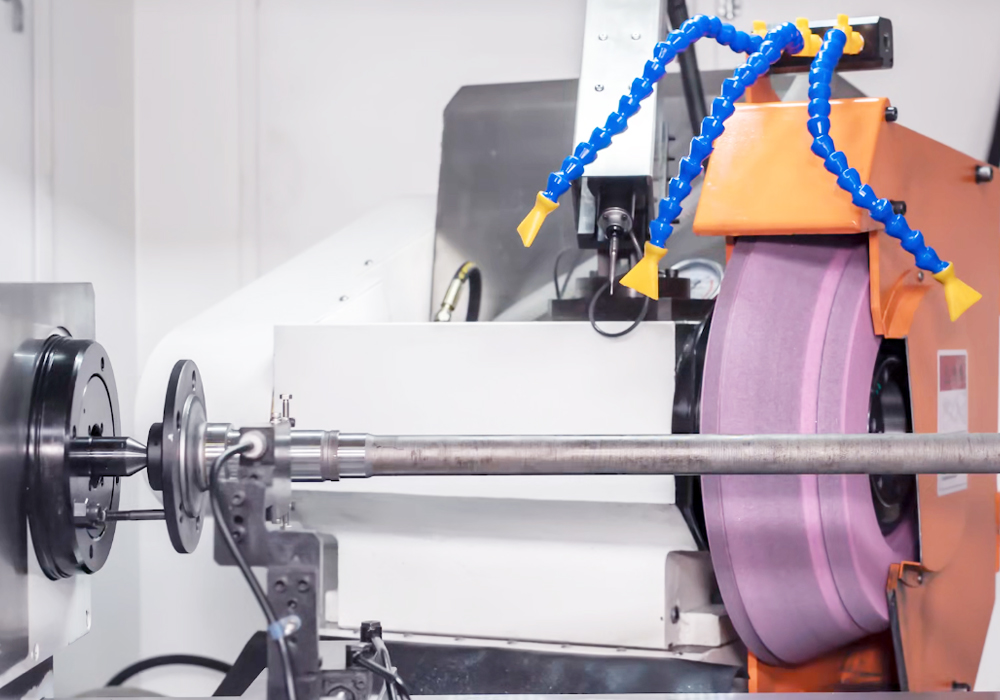
As technology evolves and manufacturing demands increase, the need for innovative precision grinding services has become more crucial than ever. Precision grinding is an integral part of various industries, including aerospace, automotive, medical, and electronics. This advanced technique ensures that components meet strict tolerances, maintain superior quality, and achieve optimal performance. In this article, we will explore the latest innovations in precision grinding services and discuss how they address today's advanced manufacturing needs.

1. Cutting-edge Grinding Equipment

The precision grinding industry has witnessed significant advancements in grinding equipment over the years. Newer machines boast higher accuracy, faster speeds, and improved automation capabilities. Some of the latest equipment includes:

  • CNC grinding machines: These computer-controlled machines offer superior precision, consistency, and repeatability, resulting in higher-quality components and reduced production times.
  • High-speed grinding machines: These machines operate at incredibly fast speeds, improving productivity and reducing heat generation, which can lead to better surface finishes and dimensional accuracy.
  • Multi-axis grinding machines: These machines enable simultaneous grinding of multiple surfaces or features, increasing efficiency and overall component quality.

2. Advanced Grinding Techniques

To stay competitive and meet the evolving needs of advanced manufacturing industries, precision grinding service providers are constantly exploring and implementing new techniques. Some of these innovative methods include:

  • Electrochemical grinding (ECG): This process combines electrical and chemical energy to remove material, resulting in minimal thermal damage and superior surface finishes.
  • High-efficiency deep grinding (HEDG): This technique uses high wheel speeds and removal rates to achieve faster cycle times, lower grinding forces, and improved component quality.
  • Peel grinding: This method employs a narrow grinding wheel to perform both roughing and finishing operations in a single pass, resulting in reduced cycle times and improved surface finishes.

3. Process Optimization and Quality Control

Innovative precision grinding services focus on optimizing production processes and implementing strict quality control measures to ensure that components meet the highest standards. Some of these measures include:

  • Real-time monitoring: Advanced sensors and software enable real-time monitoring of grinding operations, allowing for rapid adjustments and continuous improvement.
  • In-process gauging: This technique uses sensors to measure component dimensions during the grinding process, ensuring consistent accuracy and eliminating the need for time-consuming post-process inspections.
  • Statistical process control (SPC): By collecting and analyzing data on key process parameters, precision grinding service providers can identify trends, optimize processes, and maintain strict quality control standards.

4. Embracing Industry 4.0 Technologies

To further enhance their services, precision grinding companies are embracing Industry 4.0 technologies such as the Internet of Things (IoT), artificial intelligence (AI), and machine learning. These technologies enable better data collection, analysis, and communication, resulting in improved process control, predictive maintenance, and overall production efficiency.

5. Tailored Solutions for Advanced Manufacturing Needs

Innovative precision grinding services understand that each industry and application presents unique challenges and requirements. By offering tailored solutions, these companies can address the specific needs of advanced manufacturing sectors, ensuring that components meet strict tolerances, have optimal surface finishes, and deliver peak performance.

Conclusion& Get in Touch

In today's rapidly evolving manufacturing landscape, our innovative precision grinding services play a crucial role in meeting the needs of advanced industries. By leveraging cutting-edge equipment, techniques, and technologies, these services can deliver high-quality, accurate components that meet or exceed customer expectations. As technology continues to advance, precision grinding service providers must stay at the forefront of innovation to support the growth and success of their clients.

Read More
Blog

Custom Swiss Screw Machining Services for Complex Medical and Dental Parts

Introduction

Swiss screw machining, also known as Swiss turning or Swiss-type automatic lathes, has emerged as a vital technology for the production of complex medical and dental parts. This sophisticated manufacturing process is widely sought after for its ability to deliver high-quality, accurate, and cost-effective results. In this article, we'll explore the advantages of custom Swiss screw machining services and their applications in the medical and dental industries.

The Importance of Precision and Quality in Medical and Dental Parts:

Medical and dental equipment demands the highest level of precision and quality to ensure patient safety and effective treatment. Small errors in the manufacturing process can have significant consequences, from device malfunction to patient harm. Swiss screw machining services provide an unparalleled level of accuracy, making it an ideal choice for manufacturing these intricate components.

Advantages of Swiss Screw Machining:

  1. High Precision and Accuracy: Swiss screw machines are renowned for their ability to produce parts with tight tolerances and exceptional surface finishes. This level of precision is essential for components that require a perfect fit, such as dental implants and surgical instruments.
  2. Scalability: Swiss screw machines are designed for high-volume production, making them perfect for the mass production of medical and dental parts. Custom Swiss screw machining services can accommodate small batch runs and large-scale orders alike, providing flexibility and efficiency to clients.
  3. Complexity: Swiss screw machines can handle complex part geometries with ease. Their simultaneous multi-axis machining capabilities allow for the production of intricate components, such as dental drills and endoscopic tools, which would be challenging or impossible to produce using other manufacturing methods.
  4. Material Versatility: Swiss screw machining is compatible with a wide range of materials, including stainless steel, titanium, and various plastics. This versatility enables manufacturers to choose the most appropriate material for specific medical and dental applications, considering factors like biocompatibility, durability, and corrosion resistance.
  5. Reduced Production Time: Swiss screw machines can perform multiple operations simultaneously, significantly reducing production time. This efficiency is crucial for clients who require quick turnaround times on their orders, especially in the fast-paced medical and dental industries.

Applications of Swiss Screw Machining in Medical and Dental Industries:

  1. Dental Implants: Swiss screw machining is used to manufacture custom dental implants, abutments, and other prosthetic components. The high precision of this process ensures optimal fit and performance of the implants.
  2. Surgical Instruments: Swiss screw machines are utilized to produce intricate surgical instruments, such as forceps, scalpel handles, and needle holders. The accuracy and fine surface finishes achieved through Swiss screw machining contribute to the instruments' reliability and performance.
  3. Orthopedic Devices: Custom Swiss screw machining services are employed in the manufacturing of orthopedic devices, including bone screws, plates, and rods. The precision and strength of these components are crucial for successful patient outcomes.
  4. Diagnostic and Analytical Equipment: Swiss screw machining is used to create precision components for diagnostic and analytical devices, such as flow meters, pressure sensors, and fluidic manifolds. These parts must be highly accurate to ensure reliable results in medical testing and analysis.

Conclusion:

Our custom Swiss screw machining services offer significant advantages for the production of complex medical and dental parts. By delivering unparalleled precision, scalability, and material versatility, Swiss screw machines have become an essential resource for manufacturers seeking to meet the rigorous demands of these industries. As technology continues to advance, Swiss screw machining will undoubtedly play a crucial role in the development of innovative medical and dental devices, enhancing patient care and improving overall health outcomes.

Read More
Blog

Ultimate guide of the forging manufacturing process (aluminum forging parts)

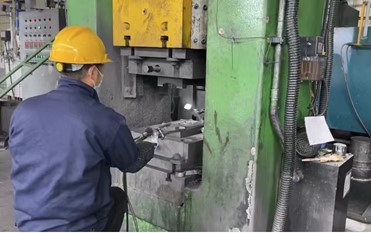
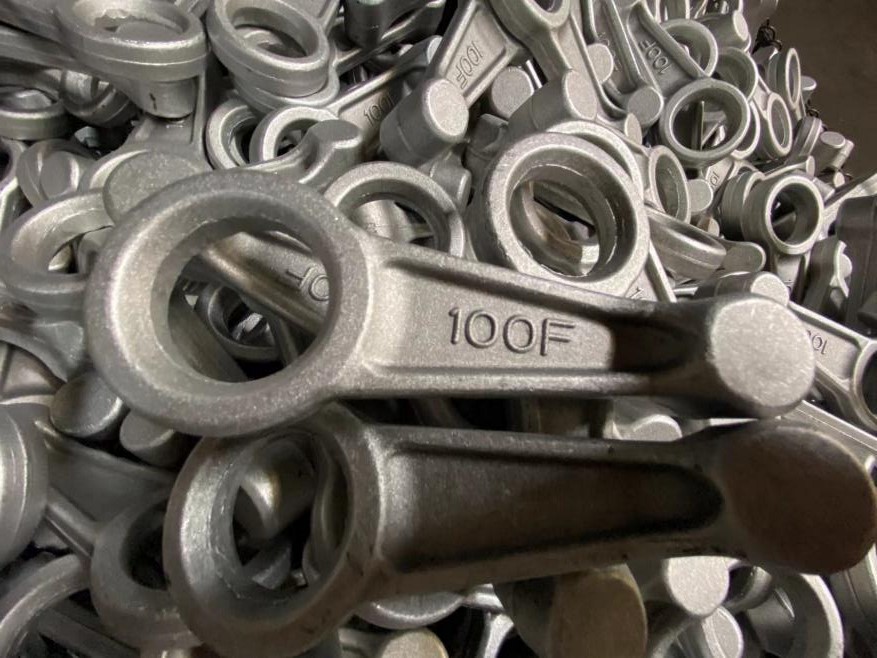
Ultimate guide of the forging manufacturing process(aluminum forging parts), and the images in the article are taken from real scenes in our own forging factory. China top-rated forging service manufacturer.

Forging refers to a manufacturing process where materials are subjected to compressive forces/stress. The force changes the shape of the metal to form the desired shape. Forging process refers to all the steps that engineers and technicians use to shape the metal into a desired shape.

Step 1: Make the forging mold according to the drawings

Step 2: Cutting the raw material

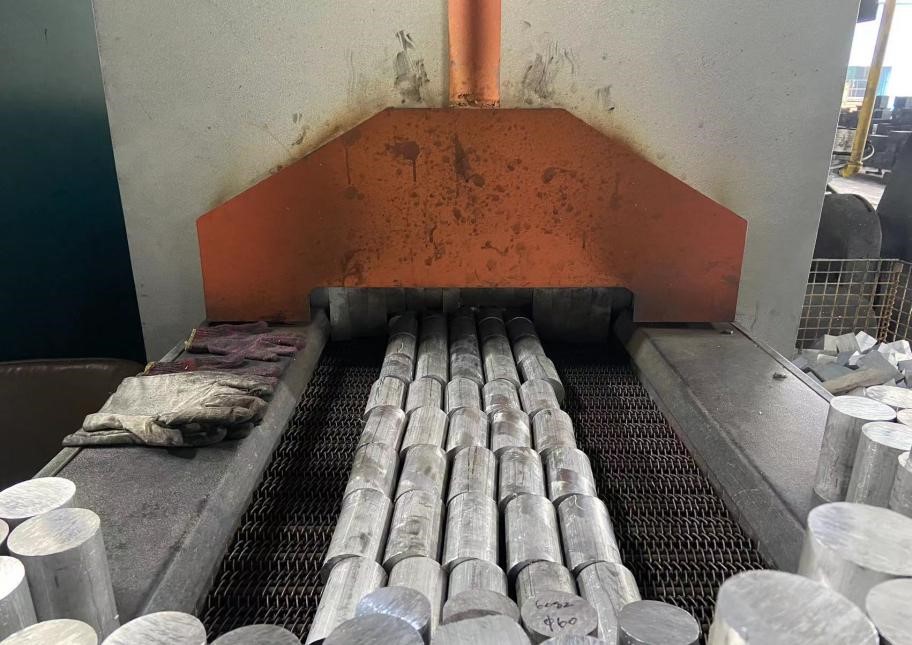
Step 3: Send the raw material into the heating furnace for heating.

Step 4: Heat the mold.

Step 5: Slightly shape the preheated raw material (this step is not necessary and depends on the shape of the workpiece)

Step 6: Apply mold release oil and forge the raw material into a billet.

Step 7: Trim the edges of the forged parts.

Step 8: Finish the rough workpiece through trimming or post CNC machining

Step 9: Sandblasting (surface treatment according to customer requirements).

Step 10: Pack and ship the finished forging product.

The pictures of the forging process above can help you understand forging and forged parts.

REQUEST YOUR CUSTOM FORGED PRODUCTS FROM BSDPARTS TODAY

As an ISO 9001:2015-certified company, Bsdparts hold ourselves to strict quality standards, incorporating stringent process control measures to ensure that every forged part aligns with expectations. What's more, we work with net or near-net forging processes to reduce waste and cut lead times, meaning that you don't have to sacrifice sustainability for efficiency.

Read More
Blog

How to Optimize Your Design for CNC Machining and Ensure Quality Results

CNC machining is a highly advanced, computer-driven manufacturing process that can produce complex, precise components for a range of applications. However, in order to achieve the highest quality results, it is essential that the design is optimized for CNC machining. In this guide, we'll explore the best practices for optimizing your design and ensuring quality results.

1. Design for Manufacturability

The first step in optimizing your design for CNC machining is to ensure that it is designed for manufacturability. This means designing with the manufacturing process in mind, taking into account the limitations and capabilities of the CNC machining process. For example, avoid sharp corners and edges, as these can cause tool wear and breakage during machining. Instead, use fillets and radii to reduce stress concentrations and improve part strength.

2. Material Selection

Another key consideration is the selection of the material for the component. Different materials have different properties, and your material selection will determine the manufacturing process used. Some materials, such as aluminum and brass, are easier to machine and can lead to higher-quality results. Other materials, such as titanium and stainless steel, are more challenging to machine and may require specialized tooling.

3. Design Tolerance

Tolerance refers to the allowable deviation or variation from the specified dimensions of a component. In CNC machining, it is important to design with tolerances in mind, as these can significantly impact the manufacturability and quality of the final product. Design tolerances must be precise enough to ensure proper fit and function of the final product, but not so tight that they are impractical or excessively expensive to manufacture.

4. Surface Finish

In CNC machining, the surface finish of the component is an essential aspect to consider. A smooth surface finish is important for aesthetics, corrosion resistance, and improving the part's overall functionality. Designing for a specific surface finish can help in reducing the amount of post-processing work needed on the component, saving time and costs.

5. Avoid Undercuts

Undercuts are features that cannot be accessed by the CNC machining tool without interference or damage to the tool. This limits the types of parts that can be produced and can increase machining times, adding to the overall cost of the project. By designing parts with minimal or no undercuts, you can achieve faster machining times and higher-quality results.

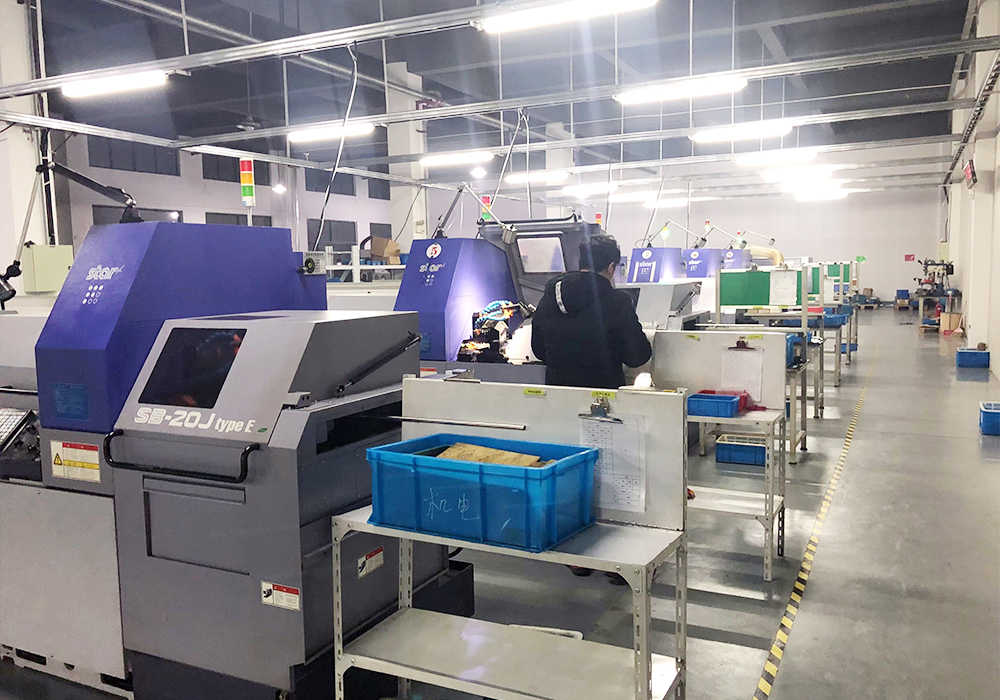
Swiss lathe - Workshop panoramic view

three-coordinate measuring machine

In conclusion, optimizing your design for CNC machining goes a long way in ensuring high-quality results. Designing for manufacturability, selecting the right material, designing with precise tolerances, considering surface finish, and avoiding undercuts are all essential factors to consider. With these best practices, you can ensure that your CNC machined parts meet your specifications, are delivered on time and are of the highest quality.

If you need to transform your design into an actual product, feel free to contact us. We can assist you throughout the entire process, from demand analysis, sample manufacturing, to bulk production, to turn your ideas into reality.

Read More
Blog

A Comprehensive Guide to CNC Machining and Its Applications

CNC machining is a versatile manufacturing process that has revolutionized the production of complex and precise parts. It uses computer-controlled machines to remove material from a workpiece to produce parts accurately and efficiently. In this guide, we'll explore the basics of CNC machining and its applications.

What is CNC Machining?

CNC machining refers to the automated control of machine tools using numerical computer programs. Machine tools such as lathes, mills, routers, and grinders are operated through a computer program to remove material from a workpiece following a predetermined design specification. Unlike manual machining, CNC machining allows for higher precision, accuracy, and consistency in part production.

Applications of CNC Machining

CNC machining has a vast range of applications across multiple industries. Here are some of the most common:

1. Aerospace and Aviation

The aerospace and aviation sectors heavily rely on CNC machining to produce high-quality, complex, and precise parts for aircraft engines, structural components, and landing gear. CNC machining allows for the production of consistent and standardized parts with tight tolerances, making it ideal for aerospace applications.

2. Medical Devices

The medical device industry requires stringent accuracy and reliability in its products. CNC machining is ideal for producing small, intricate, and precise parts such as orthopedic implants, surgical tools, and prosthetics, as they require exact specifications that cannot be achieved through manual machining.

3. Automotive

The automotive industry requires high precision in the manufacturing of engine components, transmission parts, and other complex components. CNC machining offers the capability to produce precise parts with tight tolerances, making it an ideal manufacturing process for the automotive industry.

4. Electronics

CNC machining is used in the production of electronic components such as printed circuit boards (PCBs), connectors, and housings. The accuracy and consistency of CNC machining make it ideal for producing intricate and complex electronic components that require tight tolerances.

5. Energy

The energy industry requires a range of large-scale components such as wind turbine parts and oil and gas drilling equipment. CNC machining provides the accuracy and precision needed for the production of these components.

In Conclusion

CNC machining has transformed the manufacturing industry, enabling the production of high-quality, complex, and precise parts quickly and efficiently. From aerospace to electronics, automotive to medical devices, CNC machining has multiple applications across a wide range of industries. Its ability to produce uniform, standardized parts with tight tolerances makes it an essential manufacturing process in today's world.

Read More